New gift to invigorate culinary archive as research destination
November 16, 2026
A bequest of more than $21 million from Daniel T. Longone, professor emeritus of chemistry who died in 2024, will help ensure that the U-M Library's Janice Bluestein Longone Culinary Archive remains a leading resource for exploring the history of food and drink in America, and lives up to the ambition, creativity, and persistence of its namesake.
The gift, which is the largest in the library's history, honors Longone’s wife, Janice B. Longone (1933-2022), whose lifelong collecting and pioneering research shaped the archive.
Having already established an endowment for the Janice B. Longone Librarian for Culinary History, the funds will provide further lasting support for preservation, acquisition, teaching, research, and public programs.
“This gift is an extraordinary investment in the future of an amazing culinary archive,” said Lisa Carter, university librarian and dean of libraries. “The endowed librarian position provides dedicated leadership, and this level of support gives that leader the resources to preserve and build the collection, welcome and engage researchers and students, and connect its stories with the broader public. Together, these commitments ensure that Jan and Dan Longone’s vision will continue to flourish and impact scholars well into the future.”
More than a collection
In a 2022 interview, Dan Longone said that their culinary journey began when they were asked to provide a "typical American meal" by their international student peers who'd brought their own home cuisines to the shared dining table.
Jan agreed, Dan said, "but when we got home, she asked, ‘What is a typical American meal?’" Her attempt to answer that question sparked a lifelong passion that lasted more than six decades.
The resulting collection of recipes, menus, advertisements, cookbooks, and other materials — now more than 30,000 items — was among the first culinary archives, and was a catalyst for the study of food and drink in the academy.
Her influence on this development is hard to overstate. She knew that culinary history, as revealed in these often overlooked materials, could unlock important findings and insights.
As chef and food writer Ruth Reichl told The New York Times in 2022, “She knew the value of looking at cookbooks unmitigated by a historian’s perspective.”
Reichl is just one among many figures in the culinary world to acknowledge the impact of the collection.
Among them is Ann Arbor's Ari Weinzweig, founding partner of Zingerman's Community of Businesses, who credits the collection for helping him get his business started.
Chef Rick Bayless told The New York Times he might not have had his career without Longone and her collection, at the time housed in the basement of her home in Ann Arbor. “She would lead you down the rickety back stairs to her basement with all these dehumidifiers going and these metal racks full of books and you could spend as long as you wanted there,” he said. “I thought I had struck gold.”
Her culinary circle also included James Beard, Julia Child, Craig Claiborne, and M.F.K. Fisher.
It's impossible to pinpoint when what began as a personal collection became a research archive, but in 2000 she and Dan began donating it to the university.
A record of American foodways
The bulk of the archive dates from the 18th through the early 21st centuries. Its particular strengths include 19th- and 20th-century cookbooks, charity and community cookbooks, African American and immigrant cookbooks, manuscript cookbooks, restaurant menus, food-related advertising, and materials documenting the history of wine and viticulture.
Current collecting priorities include the foodways of 20th-century immigrant communities, regional cooking, Native American cookbooks, vegetarian and vegan cooking, and handwritten recipe notebooks and card boxes.
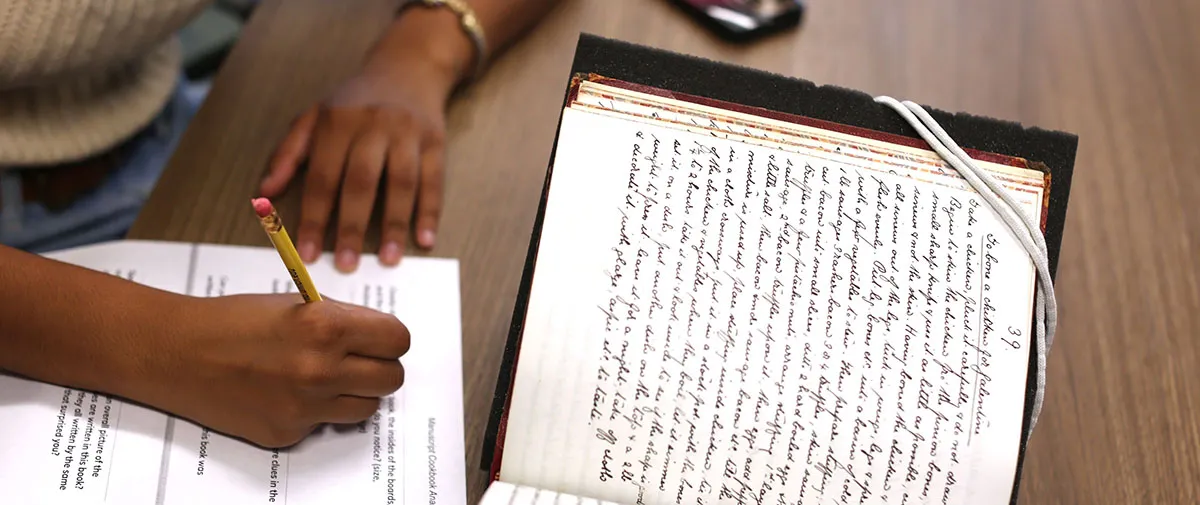
Collection curator Juli McLoone said the most historically significant work in the collection is Malinda Russell’s "A Domestic Cook Book: Containing a Careful Selection of Useful Receipts for the Kitchen." Published in Paw Paw, Michigan in 1866, Russell’s cookbook is the oldest known cookbook authored by an African American woman, and the library holds the only known copy.
Like many of the collection's public domain holdings, Russell's cookbook is accessible online via HathiTrust. It was also recently published in a new paperback and open-access ebook edition that incorporates historical context and scholarly perspectives.
Making it accessible and useful
The original donation of the collection itself was extraordinary. But large and complex collections like the culinary archive — which contains such a variety of items, many of them worn from use or age or both — are only made useful to researchers via the experts who manage and share them. This new gift will enable and expedite cataloging, conservation, unique acquisitions, and collection management.
An additional $1.5 million gift from Longone has already been deployed to establish an endowed librarianship to provide for permanent leadership. Juli McLoone, whose expertise as the collection's longtime curator has helped establish the archive as a research destination, serves as the inaugural Janice B. Longone Librarian for Culinary History.
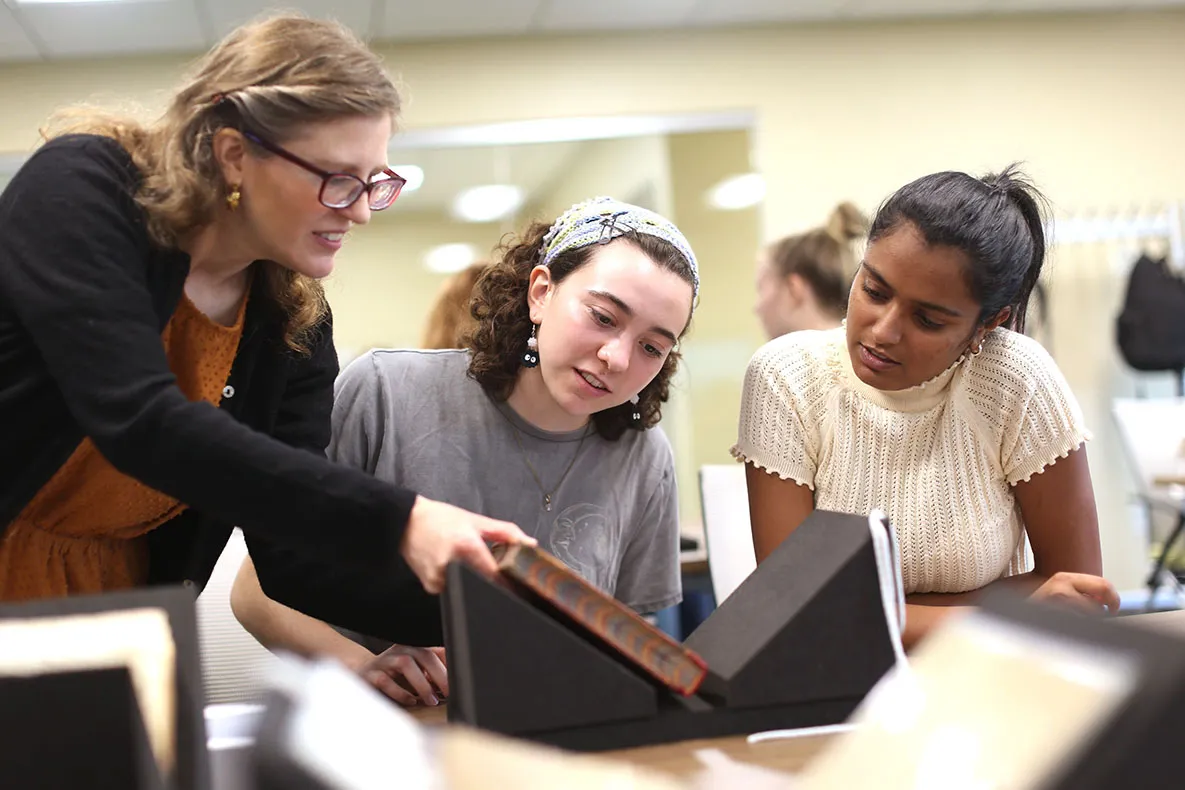
McLoone will lead the expansion of the archive's activities as a center for research and public engagement, and the funds will also support research fellows and visiting scholars and artists; workshops and seminars; digitization; curated online collections; and an annual public lecture.
In recent years, classroom use has grown dramatically. Students work directly with original materials to investigate questions about identity, migration, race, gender, labor, the environment, business, and everyday life. The gift will allow the library to meet growing curricular demand.
It will also accelerate the work begun by the Longones to establish the archive as a destination for culinary information and scholarship, and as a public resource for anyone curious about how foodways and their related system can help us better understand our own history.
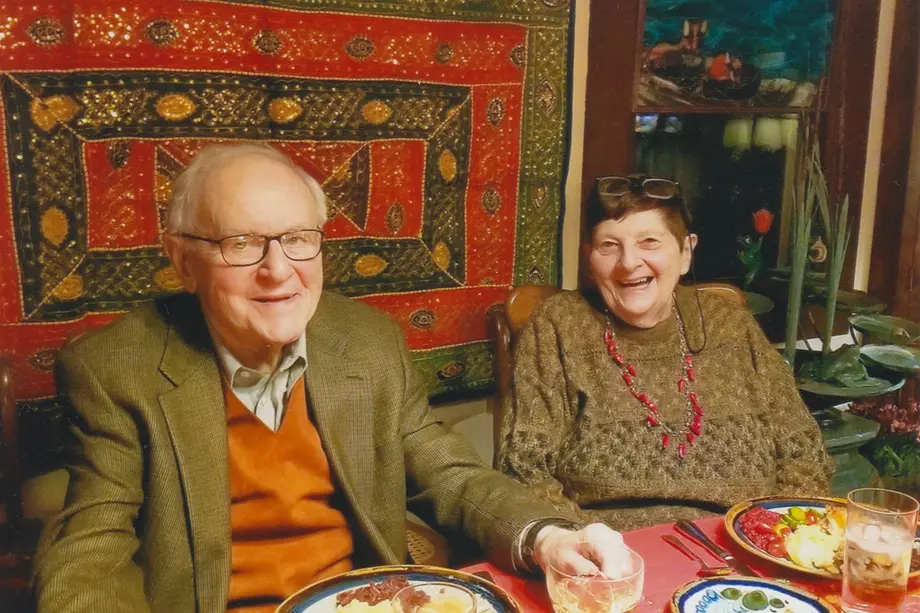
Dan and Jan Longone, December 2019, photo by Christine Kolars.