November is Native American Heritage Month
November 5, 2025
Celebrate the heritage, history, art, languages, and traditions of American Indians and Alaska Natives during Native American Heritage Month this November.
We use Native American and American Indian here; learn more about the various terms used by Indigenous people in the Americas. The best term is always what an individual person or tribal community uses to describe themselves.
Here in Michigan
The Bodewadmi, the Odawa, and the Ojibwe, collectively named the Anishinaabe, lived in the lands and the waterways of the Michigami before the first white settlers arrived here. They continue to live here still, and the University of Michigan owes its creation to them.
Across Michigan, there are 12 federally recognized Tribal governments. The three main Anishinaabe nations in Michigan, Ojibwe (Chippewa), Odawa (Ottawa), and Bodewadomi (Potawatomi), collectively form The Council of The Three Fires.
The library extends free borrowing privileges to Native and Indigenous people not already affiliated with the university. Members of these communities can obtain guest cards, normally available for a $250 annual fee, at no cost, and then check out items from the library's circulating collection. Cards can be obtained at the Hatcher North Information Services Desk.
Consult our American Culture guide
Browse the American Culture research guide as a jumping-off point for research into Indigenous language revitalization, sovereignty and governments, databases and journals, and other topics and references. It includes information about Native communities in Michigan — libraries and language centers, colleges, heritage curriculums, student groups, and more.
Access library collections
Search our multicultural and American culture studies collection, which includes Native American Studies.
Delve into the Joseph A. Labadie Collection, which encompasses civil liberties and social protest movements.
View the online exhibit American Encounters: Native American History, which features books, maps, manuscripts, and photographs of early encounters between Indigenous peoples and European explorers, warfare, native leaders, and Indian boarding schools.
Examine the Warren Petoskey Papers, a digital collection of Odawa and Lakota elder Warren Petoskey’s personal and professional documents, photographs, and audio recordings.
Refer to the bibliography Native Americans Manuscript Collections for guidance to manuscript collections in the Bentley Historical Library that reflect the history and culture of Native Americans in Michigan.
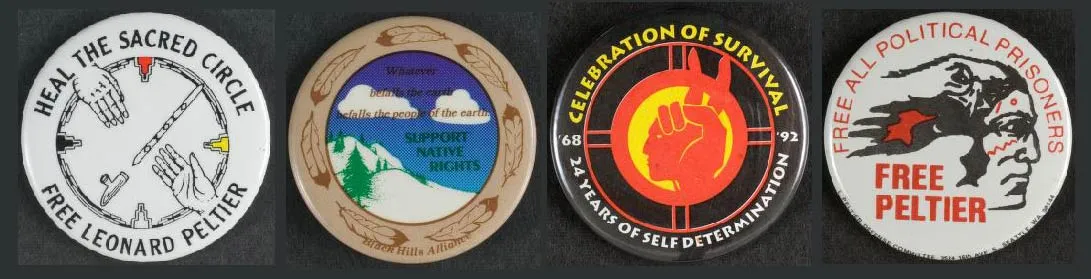
Find out about Native American Heritage Month events offered by Multi-ethnic Student Affairs (MESA).
Check out these movie recommendations (just a fraction of what’s available). You’ll need your U-M credentials to stream video or check out a DVD:
Gather. A documentary that illustrates the growing Indigenous American movement to reclaim their spiritual and cultural identities through obtaining sovereignty over their ancestral food systems. 2020, streaming video.
Songs My Brothers Taught Me. Showing the harsh realities Native families face, the movie follows the lives and relationship of two siblings living on the Pine Ridge Reservation in South Dakota. 2015, streaming video.
The Cherokee Word for Water. Based on the true story of the Bell Waterline Project, the movie recounts the struggle for, opposition to, and ultimate success of a rural Cherokee community's fight to bring running water to their families. 2013, streaming video.
Trudell. This documentary follows the life work of Native American poet, musician, and activist John Trudell (1946-2015), who became a national spokesman for the American Indian Movement. 2005, DVD.
Atanarjuat: The Fast Runner. Based on an ancient myth, this drama tells a story of love, crime, murder, and ultimately family and justice. It features an almost entirely Inuit cast, and was the first feature film ever written and acted in the Inuktitut language. 2001, DVD.
Smoke Signals. This award-winning comedy may help you understand some Native American jokes. It was the first film written, directed, and performed entirely by Native Americans. 1998, DVD.
See also the Kanopy streaming video selection of Native American Heritage Month documentaries.
For help finding materials, use Ask a Librarian. You can also contact one of our experts for help on a specific topic or area of study.
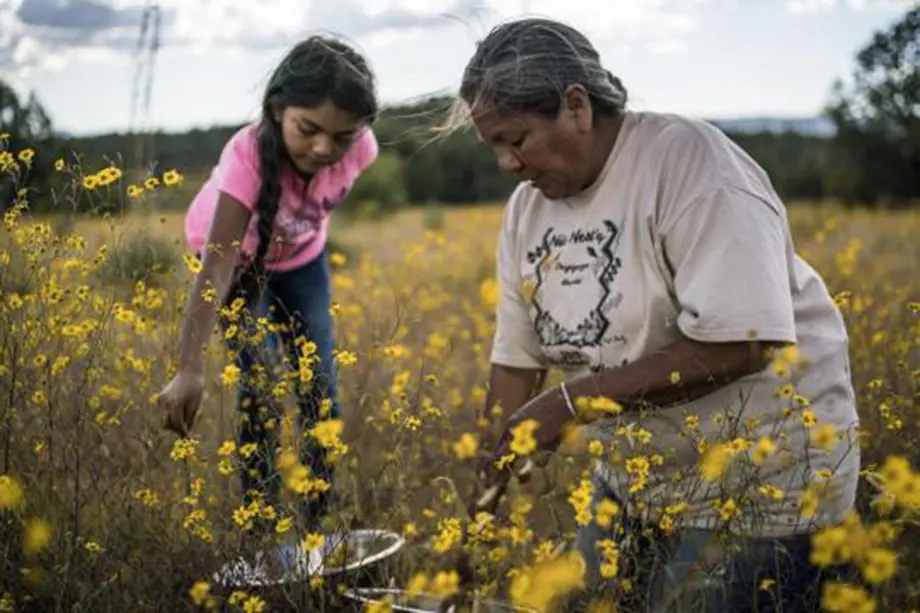
Still image from the documentary Gather.