Papyri, amulets feature in Toledo Museum of Art exhibit
April 28, 2026
A new exhibition at the Toledo Museum of Art features some unique, rarely-seen items from the library's collection.
Cursed! The Power of Magic in the Ancient World, open through July 3, 2026, explores how magic shaped daily life in the ancient Mediterranean. This exploration includes three items from our world-renowned collection of papyri — the largest in North America — and two from our Campbell Bonner Collection of Magical Amulets. These engraved precious stones, 61 in all, from Egypt and Syria, and produced from the 1st century B.C.E. to the 4th century C.E., were meant to protect their owners’ health, wealth, and love lives.
Two of the papyri (P.Mich. inv.534 and P.Mich. inv.7) contain magical recipes for spells and charms both helpful ("make the one who yesterday was [unlovable] beautiful [in the sight of all]") and malevolent ("Write the name of so-and-so upon it…speak over it into the light the name of Hecate, and this: 'Take away his sleep from such-and-such a person,' and he will be sleepless and worried").
The third (P.Michi. inv.6666) is probably the product of such a recipe — written, then folded, rolled, bound with thread, and worn around the neck or wrist to protect a woman named Helene "from every illness and every (onslaught of) shivering and fever."
Papyri like these are only rarely exhibited, since exposure to light and uncontrolled atmospheric conditions can damage these fragmentary missives from the ancient world.
The amulets, about coin-sized, are Ouroboros Enclosing Harpocrates in yellow/orange carnelian gemstone (a request for divine protection in pregnancy and childbirth) and Osiris as a Mummy, Standing to Front in a Papyrus Boat in green jasper (Osiris as ruler of the underworld was believed to provide guidance and protection to the soul in the afterlife, and also signifies fertility and renewal).
Through April 30, you can see amulets from the Bonner Collection alongside other "magical" objects in the library exhibit Materia Magica: Materiality and Ritual in the Greco-Roman World.
Cursed!, which "uncovers the spellbinding ways ancient cultures tried to bend the world to their will," also features materials from the British Museum, the Louvre, the Metropolitan Museum of Art, and, closer to home, the Kelsey Museum of Archaeology.
Curious about where else the collection's been? Last year we loaned six eighteenth-century botanical books for the Toledo Museum of Art's landmark exhibition, Rachel Ruysch: Nature into Art; a number of the library's Islamic manuscripts are always on display in the Detroit Institute of Art's Islamic World Galleries; and items from the Labadie Collection are the backbone of the exhibit American Sampler: Activating the Archive, at UMMA until June 27, 2027.
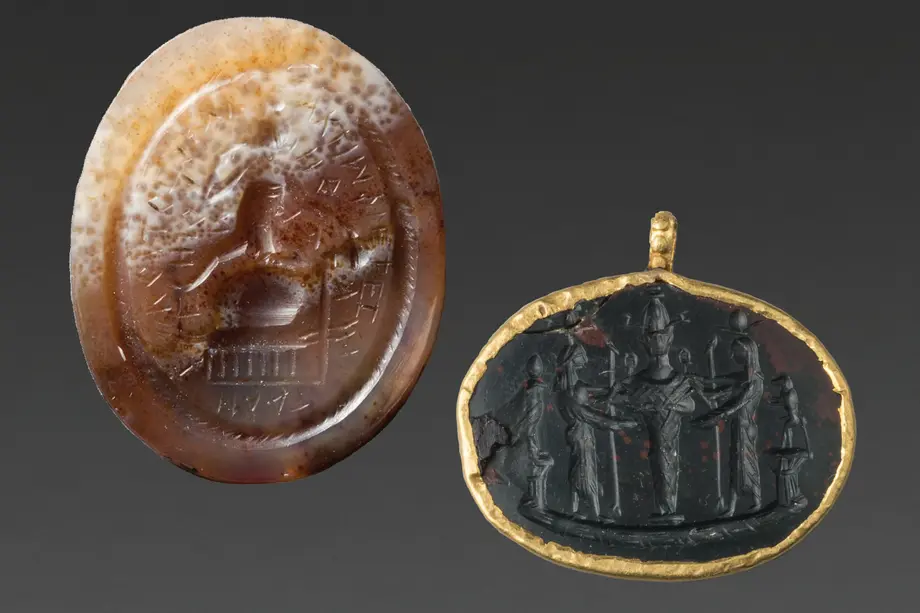
"Ouroboros Enclosing Harpocrates" (left) and "Osiris as a Mummy, Standing to Front in a Papyrus Boat"